Canadian Children in Foster Homes (CanFos)
A collaborative research project focused on improving the lives of children in foster homes through innovative data, inclusive partnerships, relational research, and policy-shaping insights.
Our
Guiding Principles
Every number is a child with people who care about them
To capture the child’s health and wellbeing
To not forget those that are not represented
To make a difference

Data Statement
The data we work with are held within federal or provincial data repositories (for example Statistics Canada). We uphold First Nations, Métis, Inuit, and Black principles of data sovereignty when it comes to access and thereafter management of data pertaining to distinct populations. Community, provincial and national organizations are involved in all aspects of our work. We work with an Advisory Circle to guide data governance, access, and management.
Background
of CanFos
Even though children living in foster homes suffer from a disproportionate amount of burden in wellness and in health, there are little data on the health and wellbeing on children in foster homes in Canada. As people who care about children in foster homes because of our own personal and professional experiences, we have worked hard to find information on their health and wellbeing.
Data Sharing and Partnership: We would like to share this data with those who are most affected by this topic, with priority to First Nations, Métis, and Inuit communities.
“We built CanFos because every child deserves to be seen—not just in care, but in the data that shapes their future.”
Featured Artwork
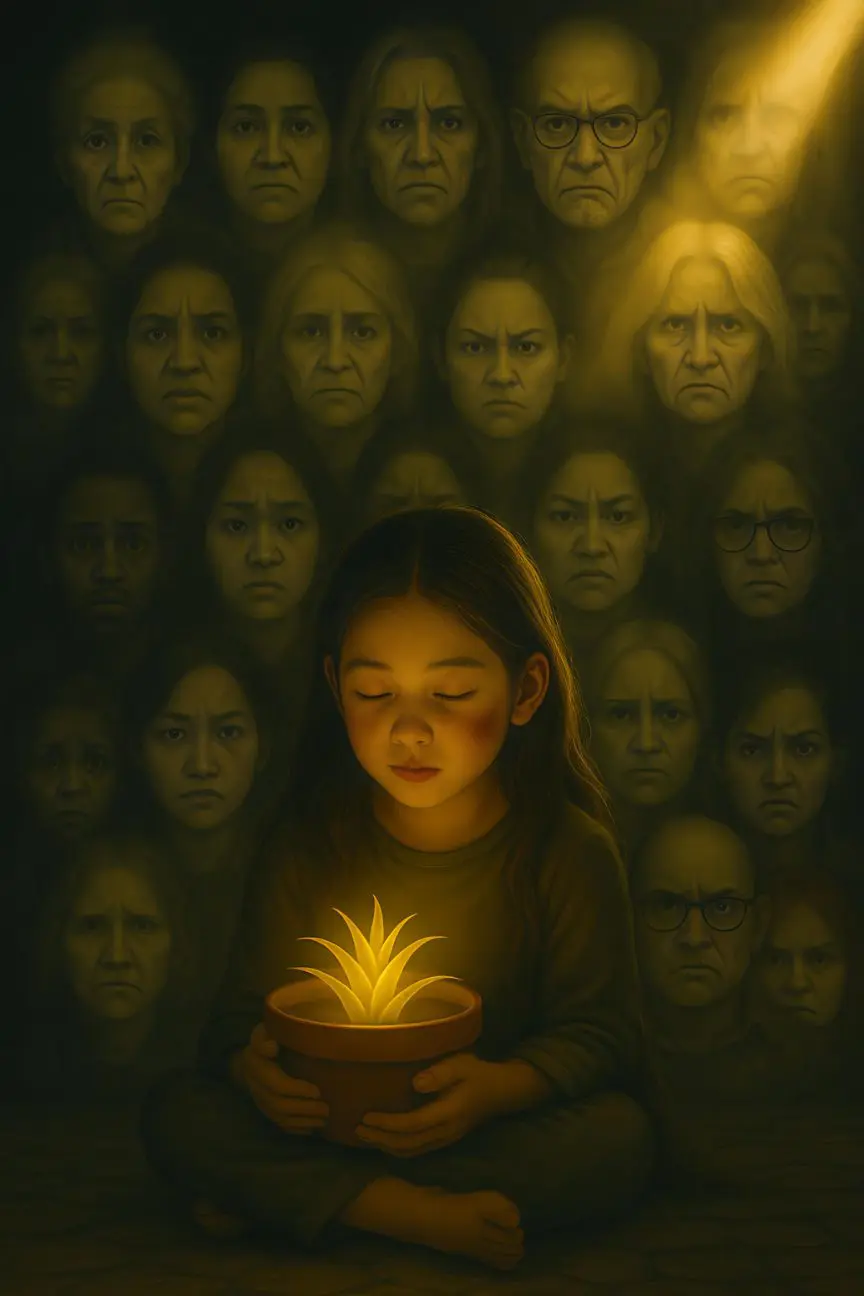
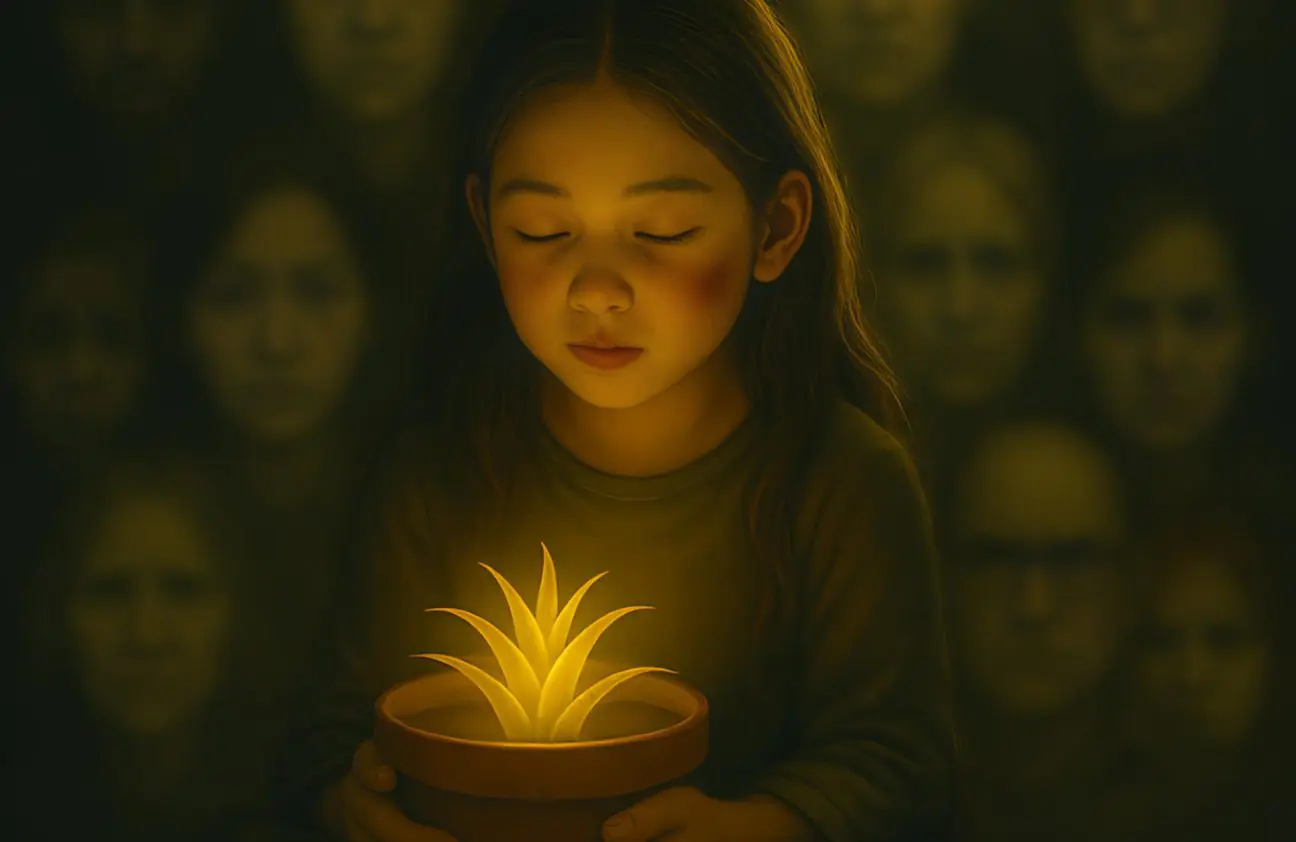
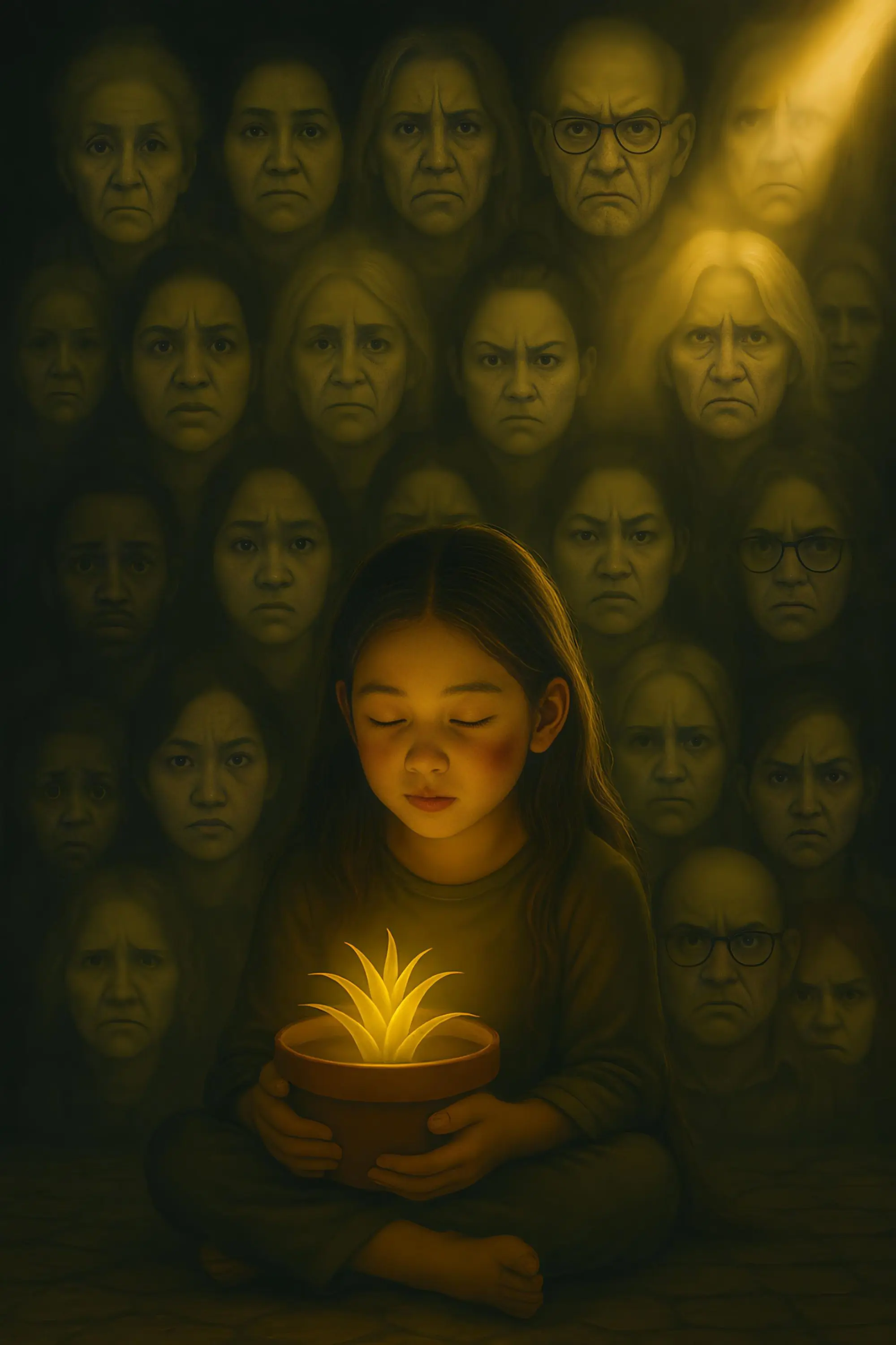
Sorrow’s Soil by Tina Cheung
This piece emerges from a research-driven inquiry into the long-term health outcomes associated with foster care experience, interwoven with personal narrative and symbolic expression.
At the heart of the work is a young child, seated alone, holding a glowing aloe plant. A subtle bruise marks her face—a quiet testament to the physical wounds that often precede entry into the foster system. She is encircled by the faces of those lost—through death, displacement, fractured bonds, and institutional failure. These faces are not merely representations of grief; they embody the cumulative weight of relational loss and abandonment that defines many foster care journeys. The overwhelming presence of others paradoxically underscores the isolating reality of the foster experience: to be surrounded by systems, families, and case files—yet profoundly alone.
This aloneness is more than emotional; it is embodied. It is the absence of consistent caregivers, the disappearance of attachments without explanation, and the silence that often follows trauma. These losses compound over time, contributing to the elevated physical and mental health risks documented in those with histories of out-of-home care.
Yet amidst this solitude, the aloe plant offers a quiet counterpoint. Based on a real aloe vera gifted to me by my first counselor, which I cared for over seven years, it symbolizes the slow, often uncertain process of healing. Known for its regenerative properties, aloe becomes a visual metaphor for resilience—proof that care, when given consistently and with intention, can root even in barren soil.
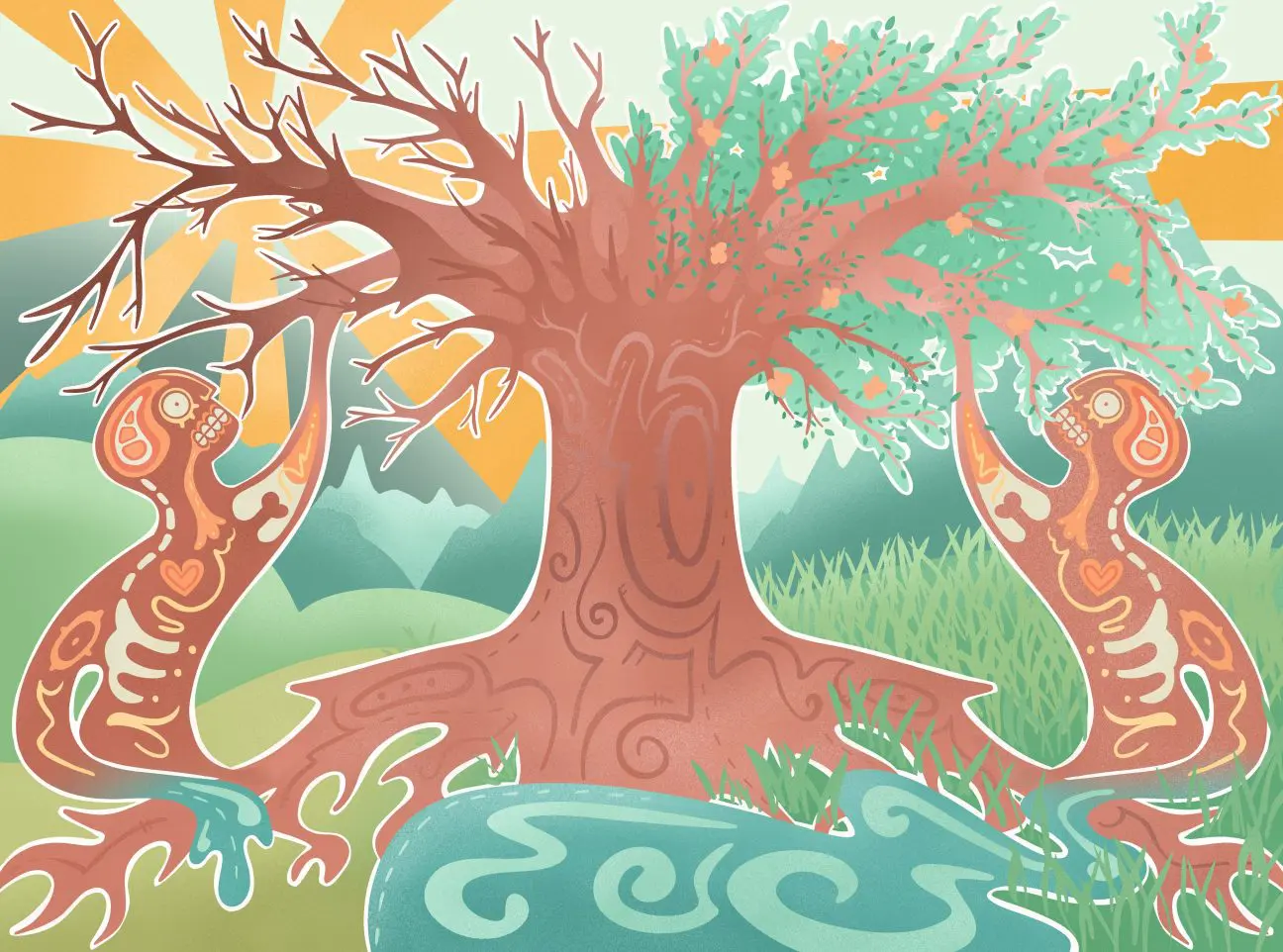


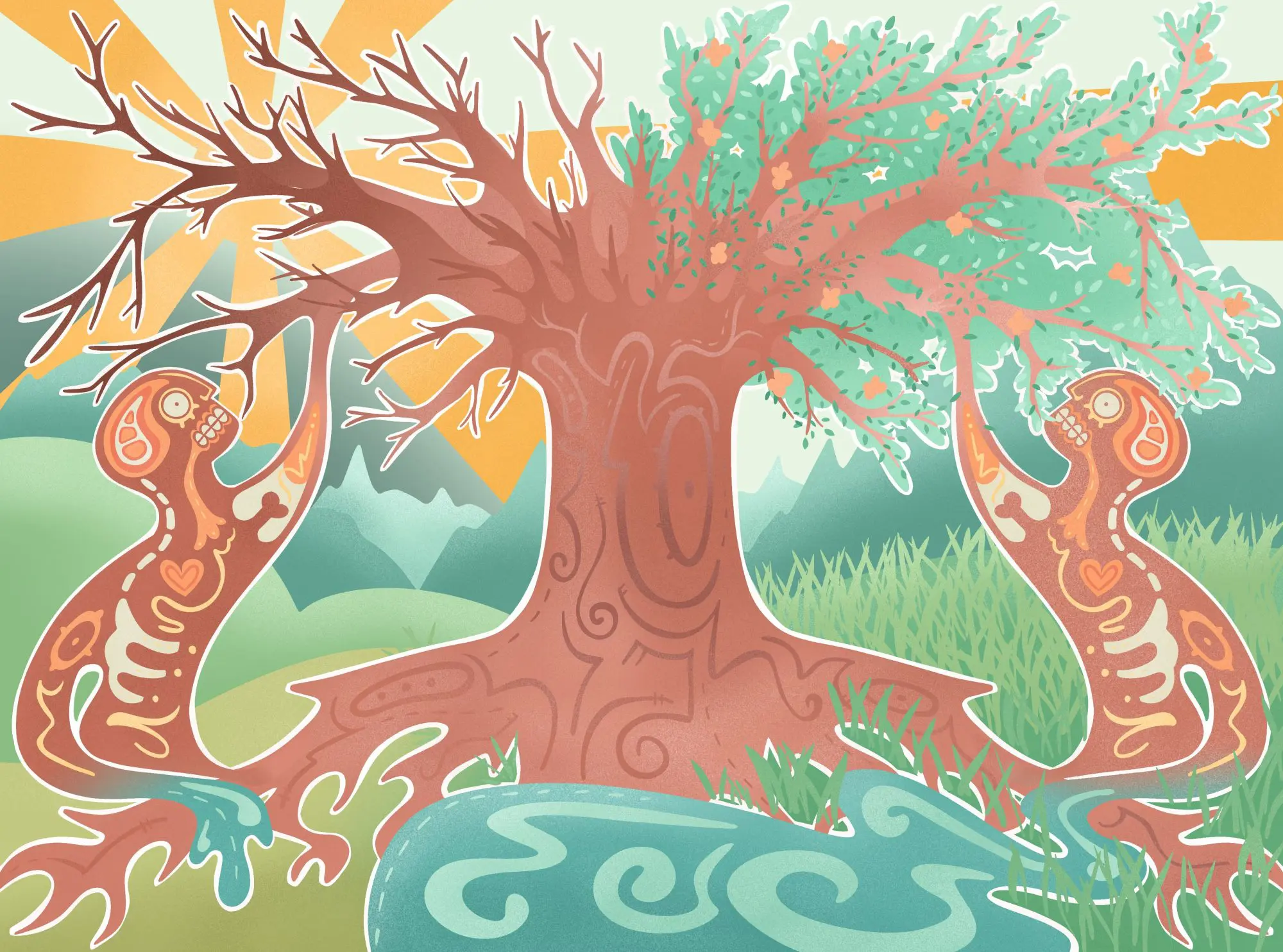
The duality of the burden and the bloom by Caleb Ellison-Dysart
This peace is about the contrast between pain and beauty that exist side by side in the lives of many Indigenous youth. One side of the tree is broken, bare and reaching toward the harsh sun. It represents the weight of trauma, disconnection and the systems that fail our youth.
The other side tells a different story, the tree blooms. The individual is connected to life, to medicine and to culture. Both sides are connected by their roots. Showing that even as things feel broken, everything is still tied together.
Collaborating agencies, communities, or organizations
Coming Soon